 how-to
Drug Free Migraine Relief: A Step by Step Guide
Table of Contents
- Understanding Your Migraine Triggers
- Migraine Trigger Management and What to Avoid
- Posture Correction for Neck Pain and Headache Relief
- Chiropractic Care for Headaches in Your Area
- Practical Daily Habits for Drug Free Migraine Relief
- When to Seek Professional Help for Your Migraines
- Frequently Asked Questions
Last Updated: 9 October 2026
Understanding Your Migraine Triggers
Migraines are complex headaches often linked to tension in your neck and upper back. When your spine isn't aligned properly, muscles tighten and nerves get irritated. This creates pain that radiates into your head.
Drug free migraine relief starts with understanding what sets yours off. Common triggers include poor posture, stress, certain foods, and muscle tension in your neck. Everyone's pattern is different.
At Dr Roberta Chiropractor in Cheadle, we help patients identify their personal triggers. Once you know what causes your migraines, you can take steps to avoid or manage those situations.
Keep a simple diary for a week. Write down:
- When your migraines happen
- What you were doing beforehand
- How long they lasted
- What made them better or worse
This record shows patterns you might not notice otherwise. Many people find their migraines cluster around specific activities or times of day.
Migraine Trigger Management and What to Avoid
Once you know your triggers, the next step is managing them. This is where drug free migraine relief becomes practical and achievable.
If your migraines come on after long hours at a desk, you need to change how you work. Adjust your screen height so it's at eye level. Keep your shoulders relaxed. Take a short walk every hour.
If stress triggers your migraines, build in calm time each day. Even ten minutes of quiet breathing helps. Many people in Stockport find that a short walk or gentle stretching eases tension before a migraine starts.
Certain foods trigger migraines in some people. Common ones include:
- Aged cheeses
- Processed meats
- Caffeine (or caffeine withdrawal)
- Alcohol, especially red wine
- Foods with MSG
Try removing one at a time for two weeks. If your migraines improve, you've found a trigger. If not, move to the next one.
Dehydration is a sneaky trigger many people miss. Drink water throughout the day, not just when you're thirsty. Aim for eight glasses daily (Dietary advice for migraine).
Sleep matters too. Irregular sleep patterns often spark migraines. Try going to bed and waking at the same time each day, even weekends.
Posture Correction for Neck Pain and Headache Relief
Poor posture is one of the biggest drivers of migraines. When your head sits forward of your shoulders, your neck muscles work overtime. This tension builds and becomes a migraine.
Good posture means your ears align with your shoulders. Your shoulders sit back and down. Your spine curves naturally, not in a straight line.
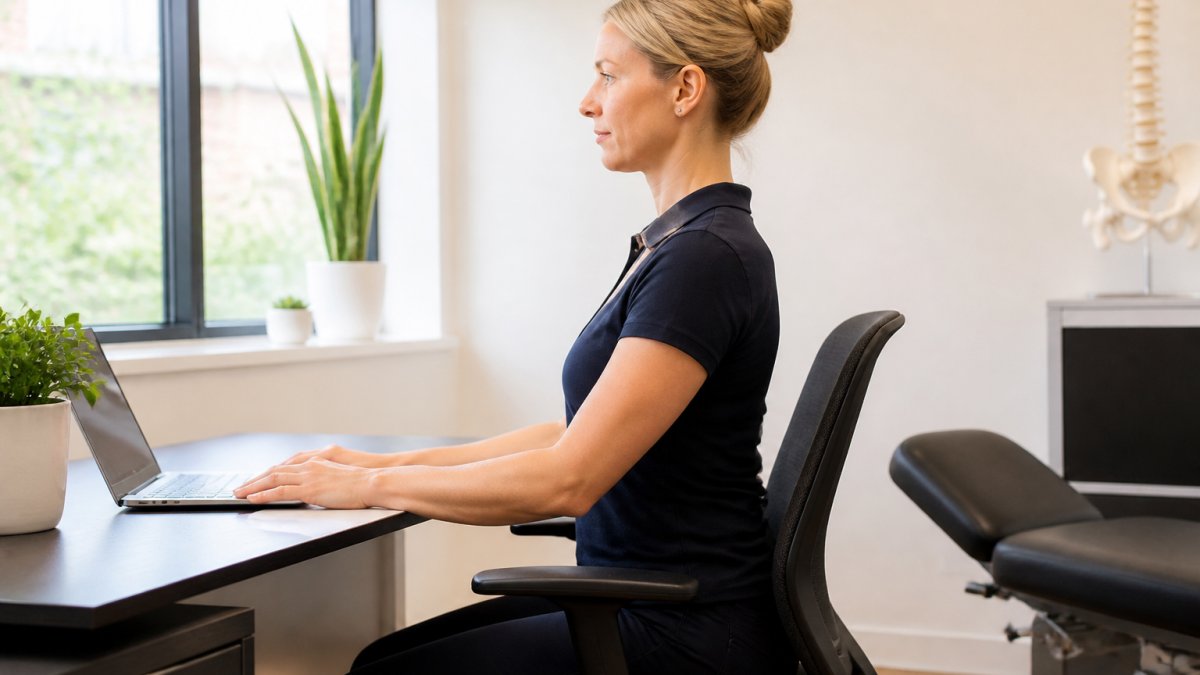
Many people in Cheadle spend hours at desks or driving. This forward head posture becomes automatic. Your brain learns it as normal, even though your muscles are straining.
To correct your posture:
- Sit with your back against a chair. Your shoulders should touch the backrest naturally.
- Pull your shoulder blades down and back slightly. Hold for five seconds. Release. Repeat ten times.
- Tilt your chin down slightly, as if making a double chin. This lengthens the back of your neck. Hold five seconds. Release. Do this ten times, three times a day.
- When standing, imagine a string pulling the top of your head towards the ceiling. This lengthens your spine naturally.
These corrections feel awkward at first. Your muscles have adapted to poor posture. After two to three weeks of practice, good posture starts to feel normal.
Your workspace matters. Your screen should be arm's length away. The top of the screen sits at eye level. Your keyboard and mouse sit close enough that your elbows bend at ninety degrees.
If you drive regularly, adjust your seat so your hips are slightly higher than your knees. This reduces strain on your lower back and neck.
Chiropractic Care for Headaches in Your Area
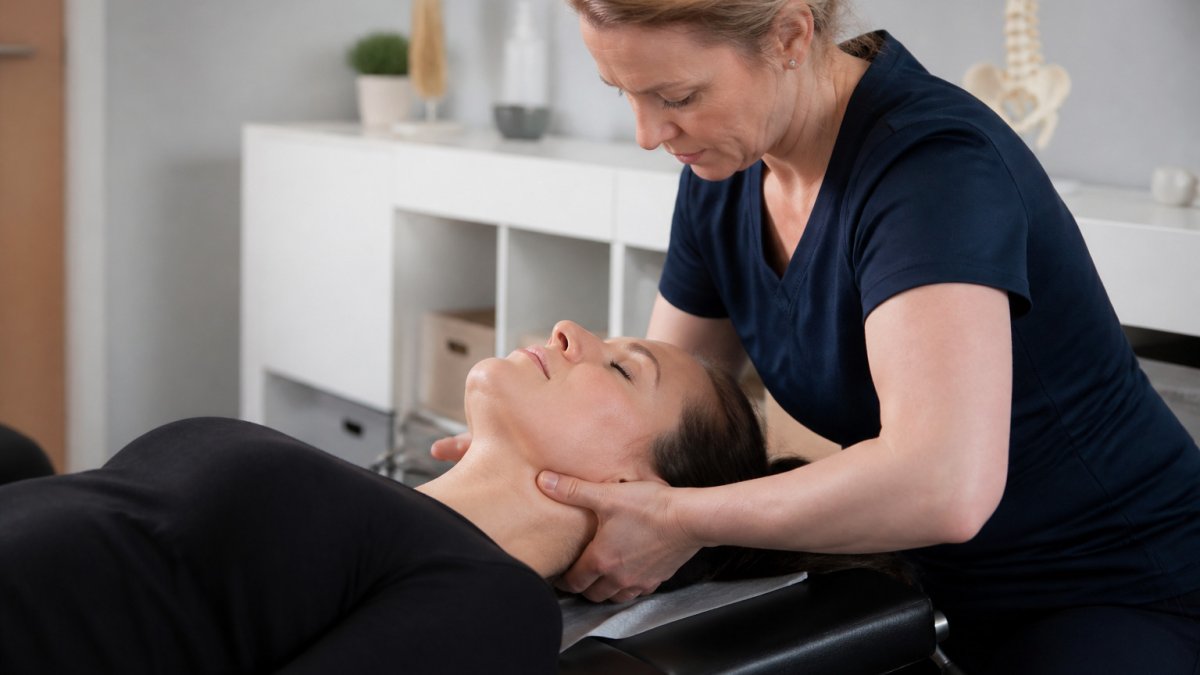
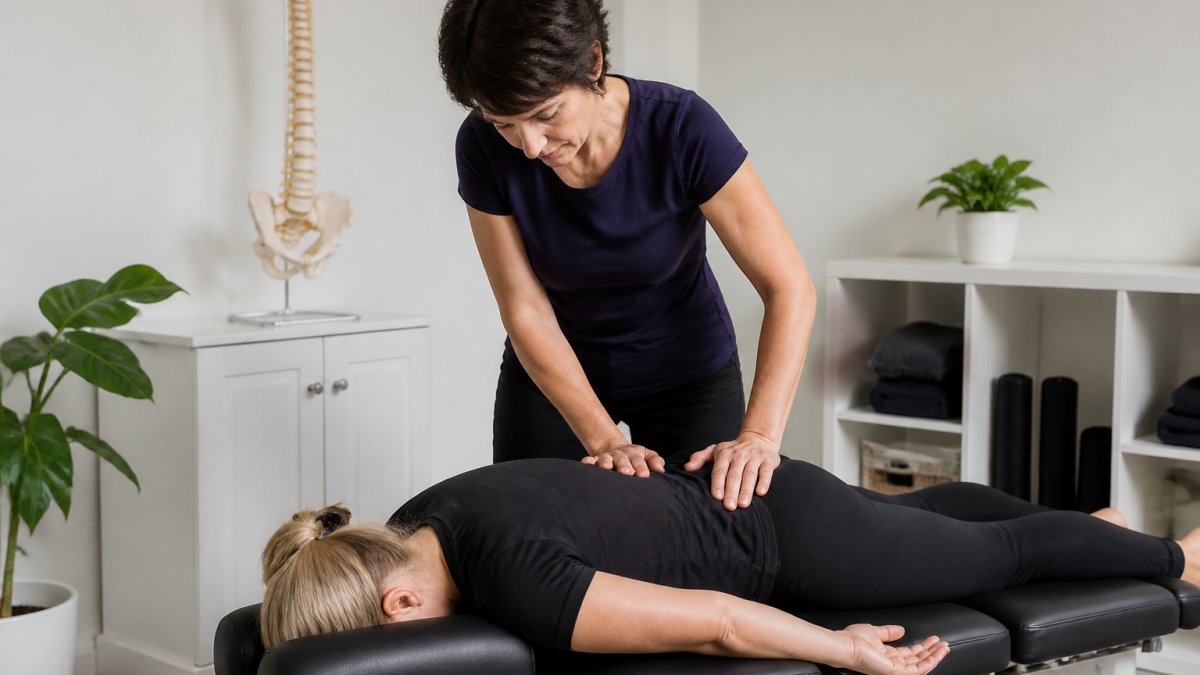
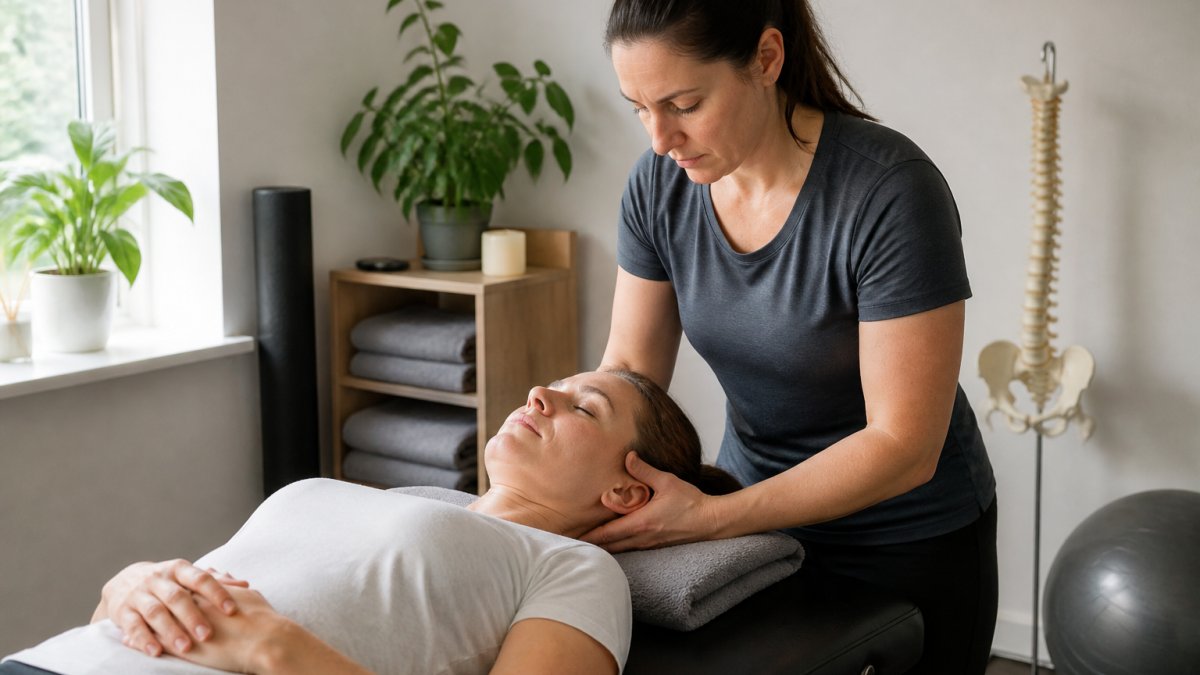
Chiropractic care addresses the structural causes of migraines. Rather than masking pain, we work to fix the underlying problem.
When vertebrae in your neck shift out of alignment, they irritate nearby nerves. This nerve irritation often shows up as a migraine. Realigning your spine takes pressure off those nerves.
Drug free migraine relief through chiropractic care works by restoring proper spinal alignment and reducing muscle tension. We use specific techniques to adjust vertebrae back into position. This relieves nerve pressure and allows muscles to relax.
Many patients in Cheadle and Stockport come in expecting a quick fix. Migraines usually develop over months or years of poor posture and tension. Reversing that takes time.
Our approach includes:
- Assessment of your spine and posture
- Specific adjustments to restore alignment
- Advice on exercises and stretches for home
- Guidance on workspace setup and daily habits
- Ongoing monitoring to track improvement
We use advanced INSiGHT scanning technology to see exactly what's happening in your spine. This helps us understand the root cause of your migraines, not just the symptoms.
Practical Daily Habits for Drug Free Migraine Relief
Small changes to your daily routine add up. Consistency matters more than dramatic overhauls.
Start your day with neck stretches. Sit upright. Slowly turn your head to the right until you feel a gentle stretch. Hold for fifteen seconds. Turn left and repeat. Do this three times each direction.
Throughout the day, take movement breaks every hour. Stand up. Walk around. Roll your shoulders backward ten times. This prevents muscle tension from building.
Manage stress actively. Stress tightens muscles and lowers your pain threshold. Even small amounts of stress relief help:
- Five minutes of deep breathing
- A short walk
- Gentle stretching
- Time away from screens
Hydration matters more than most people realise. Dehydration narrows blood vessels and triggers migraines in many people. Keep water with you and sip regularly.
At night, use a pillow that supports your neck properly. Your pillow should keep your neck neutral, not tilted forward or backward. Many people find a contoured pillow helps.
Limit screen time before bed. Blue light from screens can interfere with sleep quality. Poor sleep increases migraine risk. Stop using screens at least one hour before sleep.
When to Seek Professional Help for Your Migraines
Some migraines need professional attention. Know when to reach out.
If your migraines are new or different from your usual pattern, see your GP first. Changes in migraine type can signal something that needs medical evaluation.
If you're having migraines more than two times a week, professional care can help (the NHS). This frequency suggests an underlying structural or tension issue that won't resolve on its own.
If your migraines come with other symptoms, see your GP. These include vision changes, weakness, numbness, confusion, or severe sudden onset.
If you've tried posture changes and daily habits for four weeks without improvement, book a consultation. A chiropractor can assess your spine and identify what's driving your migraines.
If your migraines affect your work or family life, don't wait. Professional help can restore your quality of life.
At Dr Roberta Chiropractor in Cheadle, we assess each person individually. We look at your spine, your posture, your work habits, and your medical history. This helps us understand what's causing your migraines and create a plan that works for you.
Frequently Asked Questions
Can chiropractic care help with migraine symptoms?
Yes. Chiropractic care focuses on spinal alignment and reducing nerve tension, which can contribute to migraine frequency. Many people find that addressing neck and upper back misalignment helps reduce how often migraines occur. A consultation with a qualified practitioner can help determine whether this approach suits your situation.
What are common migraine triggers I should manage?
Common triggers include poor posture, neck tension, dehydration, skipped meals, stress, and certain foods like caffeine or processed meats. Migraine trigger management involves identifying which factors affect you personally, then reducing exposure to them. Keeping a simple headache diary for a week or two helps you spot patterns specific to your migraines.
How does posture affect migraine frequency?
Poor posture, especially forward head position from desk work or phone use, creates tension in the neck and upper back. This tension can trigger migraines or make them more frequent. Posture correction for neck pain involves adjusting your workstation, taking regular breaks, and addressing any underlying spinal misalignment that makes good posture difficult to maintain.
Are there immediate steps I can take for drug free migraine relief at home?
Yes. Start with hydration, rest in a quiet dark room, and gentle neck stretches. Apply a warm or cold compress to the neck or temples. Avoid common triggers like skipped meals or excess caffeine. Improve your posture during the day, especially if you spend long hours at a desk. If migraines persist, professional assessment can identify structural factors you might address.
Drug free migraine relief is achievable. It takes understanding your triggers, correcting your posture, and building better daily habits. For many people in Cheadle and Stockport, chiropractic care provides the structural correction that finally stops the cycle. Book an appointment with Dr Roberta Chiropractor to start your path toward lasting relief.