 ultimate-guide
Evidence for Chiropractic Migraine Relief: What Works
Table of Contents
- What the Evidence for Chiropractic Migraine Relief Actually Shows
- How Long Does It Take for Chiropractic to Help Migraines?
- Chiropractic Treatment for Chronic Headaches Versus Migraine
- Non-Pharmacological Migraine Relief Options Compared
- What to Expect at a Chiropractic Consultation for Migraines
- How Neurologically-Focused Chiropractic Differs From Traditional Methods
- Safety, Limitations and Who Should Avoid Chiropractic Care
- Frequently Asked Questions
Last Updated: September 30, 2026
What the Evidence for Chiropractic Migraine Relief Actually Shows
The evidence for chiropractic migraine relief is mixed but not empty. Some trials suggest spinal manipulation may reduce migraine frequency for certain patients, while other studies show no meaningful difference from sham treatment. At Dr Roberta Chiropractor, we think that nuance matters more than a headline.
Migraine is a neurological condition, not simply a stiff neck that needs cracking. That distinction shapes everything below.
Where the Research Is Strongest
The clearest signal appears in patients whose migraines sit alongside neck dysfunction. Where restricted upper cervical movement and headache frequency move together, manual therapy has shown benefit in some controlled trials. The Cochrane review of spinal manipulative therapy for headaches is a useful starting point, and it lands where most honest reviews do: modest benefit, better than nothing, weaker than medication for acute attacks.
Where the Evidence Is Still Limited
Blinding is the core problem. You cannot convincingly fake a spinal adjustment, so patients often know whether they received the real intervention. That inflates reported improvement. Sample sizes are also small, follow-up periods short, and few trials separate migraine with aura from migraine without. Anyone claiming chiropractic migraine relief is settled science is overselling it.
How Long Does It Take for Chiropractic to Help Migraines?
Most practitioners suggest a trial of several weeks before judging whether care is helping. How long it takes for chiropractic to help migraines varies with attack frequency, how long the pattern has been established, and whether neck involvement is present.
A sensible structure looks like this:
| Stage | Typical timeframe | What you are assessing |
|---|---|---|
| Initial trial | 2-4 weeks | Whether frequency or intensity shifts at all |
| Review point | 4-6 weeks | Honest reassessment against a headache diary |
| Ongoing care | Beyond 6 weeks | Only if measurable improvement continues |
Track attacks in a diary from day one. Without a baseline, you cannot tell improvement from a good month.
Chiropractic Treatment for Chronic Headaches Versus Migraine
Chiropractic treatment for chronic headaches and migraine are not the same target, and conflating them is where a lot of disappointment starts. Cervicogenic headache, which arises from the neck, tends to respond more predictably to manual therapy. Migraine is a separate neurological process, and the response is far less uniform.
That does not make chiropractic irrelevant to migraine. It means the mechanism is probably indirect: reducing neck restriction and muscular tension may lower one of several triggers rather than addressing the underlying condition.
Non-Pharmacological Migraine Relief Options Compared
Non-pharmacological migraine relief options include manual therapy, acupuncture, behavioural approaches, and structured lifestyle change. None is a cure, and the strongest evidence sits with approaches that reduce trigger load over time rather than any single intervention.
| Approach | Best suited to | Main limitation |
|---|---|---|
| Manual therapy | Neck-driven patterns | Variable response |
| Acupuncture | Frequent attacks | Time commitment |
| Relaxation and CBT | Stress-triggered migraine | Requires practice |
| Sleep and diet routine | Most patients | Slow to show effect |
How Chiropractic Fits Alongside Other Approaches
Chiropractic works best as one layer among several, not as a standalone answer. The National Institute for Health and Care Excellence guidance on headaches is clear that diagnosis comes first, and that persistent or worsening headache needs proper medical assessment.
What to Expect at a Chiropractic Consultation for Migraines
A first appointment should involve history, examination, and an explanation of findings before any treatment. Expect questions about attack frequency, aura, triggers, medication use, and family history. A practitioner should also screen for red flags that rule chiropractic out.
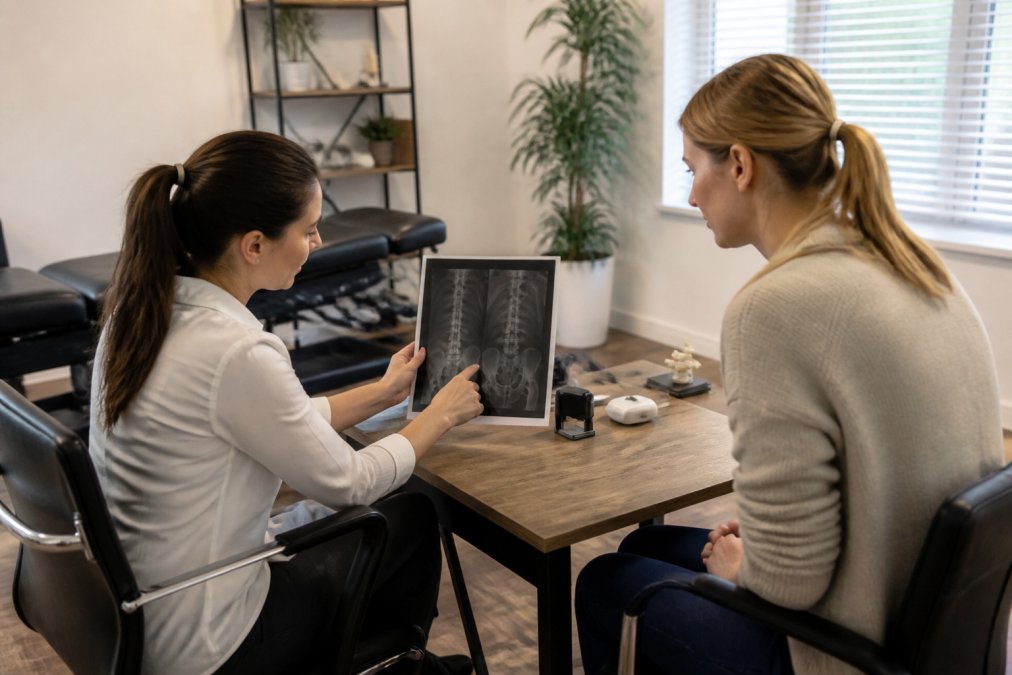
At Dr Roberta Chiropractor, consultations include advanced INSiGHT scanning technology alongside standard orthopaedic and neurological examination.
How Neurologically-Focused Chiropractic Differs From Traditional Methods
Neurologically-focused chiropractic looks at how the nervous system is adapting, not just at where the spine is misaligned. Traditional methods often centre on segmental adjustment for pain relief. The neurological approach adds assessment of nervous system function and structural correction over time, using Chiropractic BioPhysics principles where appropriate.
Safety, Limitations and Who Should Avoid Chiropractic Care
Serious adverse events from spinal manipulation are uncommon but not impossible. The NHS information on chiropractic notes that mild soreness after treatment is relatively common and usually settles within a day or two.
Avoid or postpone chiropractic care if you have:
- Recent significant trauma or suspected fracture
- Unstable spinal conditions or severe osteoporosis
- Signs of raised intracranial pressure
- Active infection, fever, or unexplained weight loss
- Pregnancy without practitioner clearance for positioning
Frequently Asked Questions
What does the clinical evidence say about chiropractic for migraine relief?
The research base is mixed but not empty. Several systematic reviews have examined spinal manipulation for migraine and found some reduction in attack frequency and intensity compared with no treatment, though many trials are small and the quality of evidence is rated low to moderate. The strongest signal appears in studies combining chiropractic care with other approaches rather than as a standalone cure. Chiropractic migraine relief is best described as a reasonable option to discuss with a qualified professional, not a guaranteed fix.
How long does it take for chiropractic to help migraines?
There is no fixed timeline, and any provider who promises one is overselling. In published trials, improvements in headache frequency are typically measured over a period of weeks to a few months, with some participants reporting change after several sessions and others seeing little difference. Your own history, how long you have had migraines, and how consistently you attend appointments all affect the picture. A sensible approach is to agree a review point with your chiropractor and reassess honestly at that stage.
Is chiropractic care considered safe for chronic migraines?
Serious adverse events from spinal manipulation are rare, but they are not zero. The most commonly reported effects are mild and short-lived: local soreness, stiffness or a temporary headache after treatment. Certain people should be cautious or avoid manipulation altogether, including those with severe osteoporosis, spinal fracture, inflammatory arthritis affecting the neck, or a history of stroke or vertebral artery problems. Always disclose your full medical history and any medication at your first appointment so the practitioner can judge what is appropriate.
Are there NICE guidelines on chiropractic care for headaches?
Current NICE guidance on headaches does not recommend spinal manipulation as a first-line treatment for migraine. It focuses on acute pain relief, preventive medication, and in some cases talking therapies such as CBT. That does not mean chiropractic is unsafe or useless, only that it sits outside the standard recommended pathway. Many people use it alongside their GP-led care. If you are considering it, tell your GP so your overall treatment plan stays joined up.
How does neurologically-focused chiropractic differ from traditional methods?
Traditional chiropractic tends to focus on relieving pain by adjusting areas that feel restricted. Neurologically-focused care looks at how the nervous system is regulating the whole body, using tools such as INSiGHT scanning to measure nerve function and posture before and after care. The aim is to address underlying patterns rather than chase symptoms. Treat it as a distinct approach rather than a proven upgrade.
What non-pharmacological migraine relief options are worth trying?
Beyond chiropractic, the options with reasonable support include identifying and avoiding personal triggers, keeping a regular sleep and meal schedule, aerobic exercise, relaxation and breathing techniques, CBT for migraine, and in some cases acupuncture. Magnesium and riboflavin supplements are sometimes recommended by clinicians, but check with your GP or pharmacist first, particularly if you take other medication or are pregnant. Most people get the best results from combining two or three approaches rather than relying on any single one.
Migraine is stubborn, and no single approach reliably resolves it. If you want a careful assessment of whether neck dysfunction is contributing to your attacks, Dr Roberta Chiropractor offers drug-free, surgery-free care with advanced INSiGHT scanning, Chiropractic BioPhysics training, and PX Docs certification. Book an appointment and get a clear answer on whether chiropractic is likely to help your pattern.