 how-to
What is structural spinal correction and how can it help you?
Last Updated: October 25, 2026
Quick Summary
Structural spinal correction is a chiropractic approach that realigns your spine to its optimal position, addressing the underlying structural issues causing pain rather than just managing symptoms. This method uses targeted adjustments and exercises to create lasting change, with most people noticing improvements within two to four weeks.
- Initial improvements typically appear within two to four weeks as pain reduces and movement becomes easier
- Full structural correction usually takes several months, depending on how long your spine has been misaligned and how consistently you do exercises
- Treatment combines targeted adjustments, postural exercises and lifestyle advice to restore better alignment
- Advanced INSiGHT scanning technology reveals the functional state of your spine and guides your personalised care plan
- Ongoing maintenance care through monthly or quarterly check-ups helps prevent relapse after your spine reaches better alignment
Table of Contents
- What is structural spinal correction?
- How structural spinal correction works
- What to expect at a chiropractic appointment
- Daily stretches to improve spinal posture
- How long does posture correction take?
- Who benefits most from structural spinal correction
- Book your structural spinal correction assessment
- Frequently Asked Questions
What is structural spinal correction?
Structural spinal correction is a chiropractic approach that focuses on realigning your spine to its optimal position. Rather than treating just the pain you feel today, this method addresses the underlying structural issues that created the pain in the first place.
Your spine supports everything. It protects your nervous system, holds your body upright, and allows you to move freely. When vertebrae shift out of position, your whole body compensates. That compensation creates tension, pain, and restricted movement.
Structural spinal correction works differently from standard pain relief. Instead of managing symptoms, it aims to restore your spine to better alignment. This is why people in Cheadle and Stockport often see lasting improvements, not just temporary relief.
The approach uses evidence based assessment methods. These help identify exactly where your spine has deviated from healthy alignment. Once we understand the problem, we can create a specific plan to address it.
Think of it like straightening a fence. You wouldn't just paint over the leaning posts. You'd reset the posts to stand properly again. Your spine works the same way.
The British Chiropractic Association explains spinal alignment and its role in musculoskeletal health
How structural spinal correction works
The process begins with a detailed assessment. We look at how your spine sits, how you move, and whether vertebrae have shifted from their ideal positions. Advanced imaging helps us see exactly what's happening.
At Dr Roberta Chiropractor in Cheadle, we use INSiGHT scanning technology. This shows us the functional state of your spine and nervous system. The scan reveals patterns that explain your symptoms and guide our care plan.
Once we understand your spine's structure, treatment focuses on gentle, specific adjustments. These work to gradually restore better alignment:
- Targeted adjustments to shift vertebrae back toward optimal position
- Postural exercises to train your muscles to hold better alignment
- Lifestyle advice to prevent the patterns that created the problem
- Regular reassessment to track progress and adjust the plan
The goal is to create lasting change, not temporary relief. Your body adapts over time. As alignment improves, your nervous system functions better. Pain often reduces naturally when the underlying structural problem is addressed.
This approach requires patience. Real structural change takes time. Most people notice improvements within weeks, but full correction unfolds over months.
Research on spinal alignment and musculoskeletal function published by the Journal of the Canadian Chiropractic Association
What to expect at a chiropractic appointment
Your first visit involves thorough assessment. We spend time understanding your health history, what brings you in, and what you hope to achieve.
The consultation includes postural analysis. We observe how you stand, sit, and move. This reveals patterns that contribute to your problem.
We then perform orthopaedic and neurological testing. These tests check your spine's movement, strength, and nerve function. They help us understand exactly where problems exist.
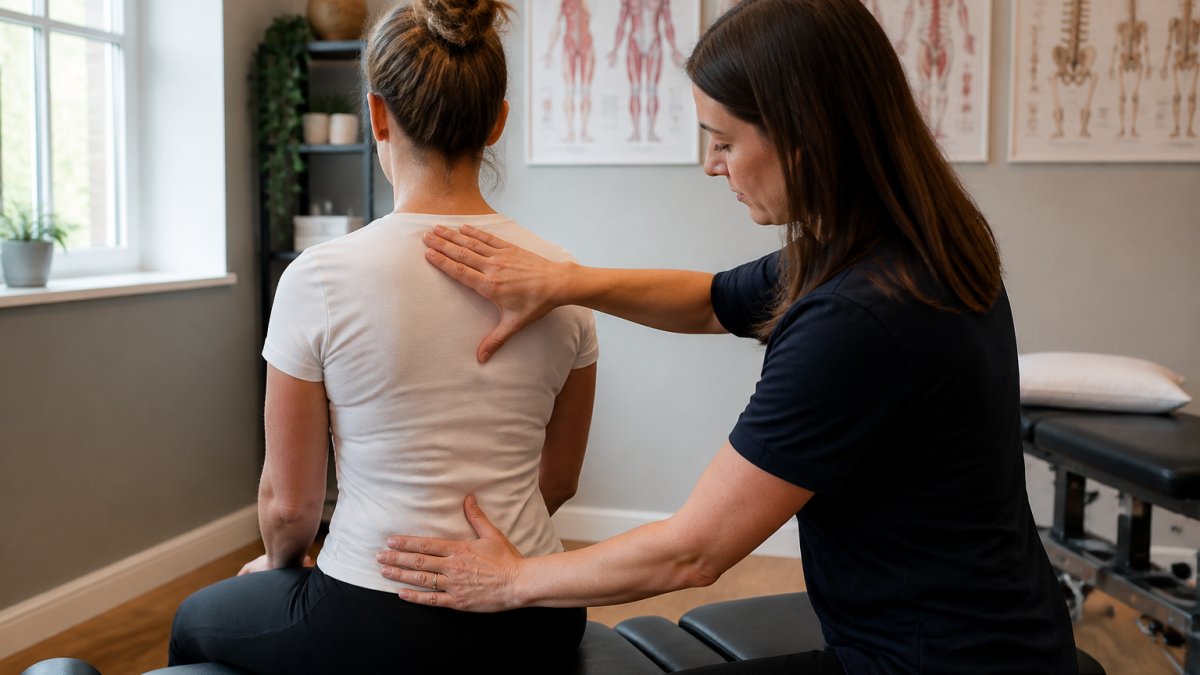
Many people ask what happens next. After testing, we often take advanced scans using INSiGHT technology. These show us the structural and functional state of your spine.
You'll receive a report of findings. This explains what we found, why it's causing your symptoms, and how we recommend treating it. You'll understand the plan before committing to care.
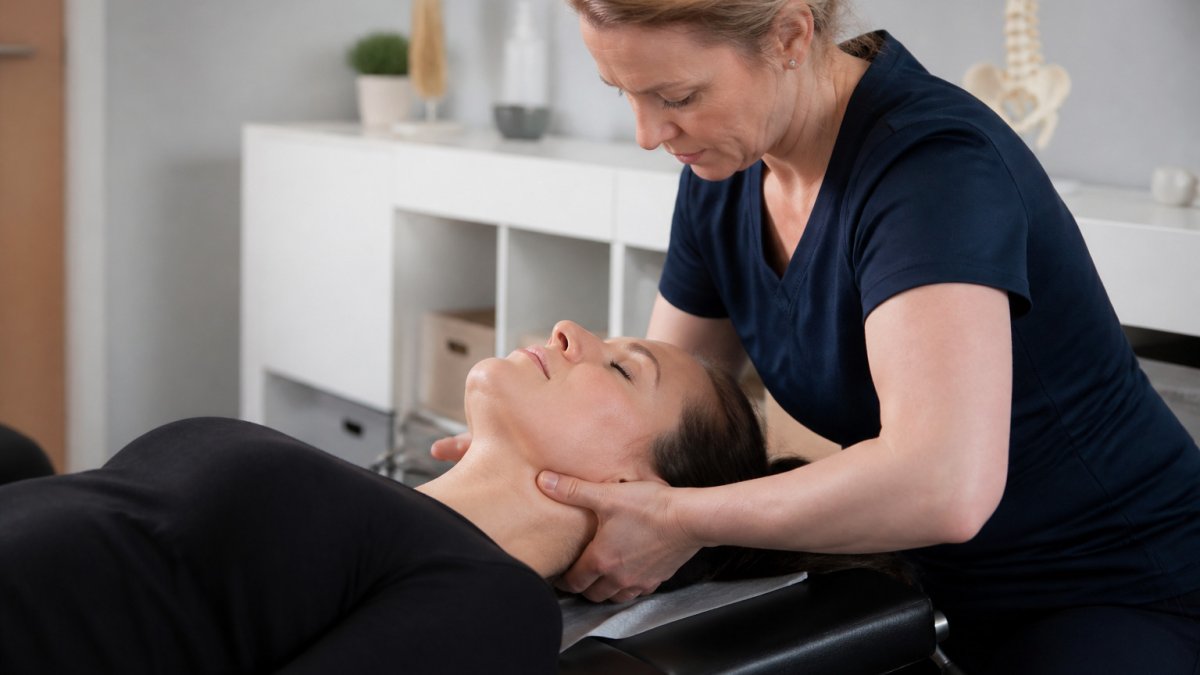
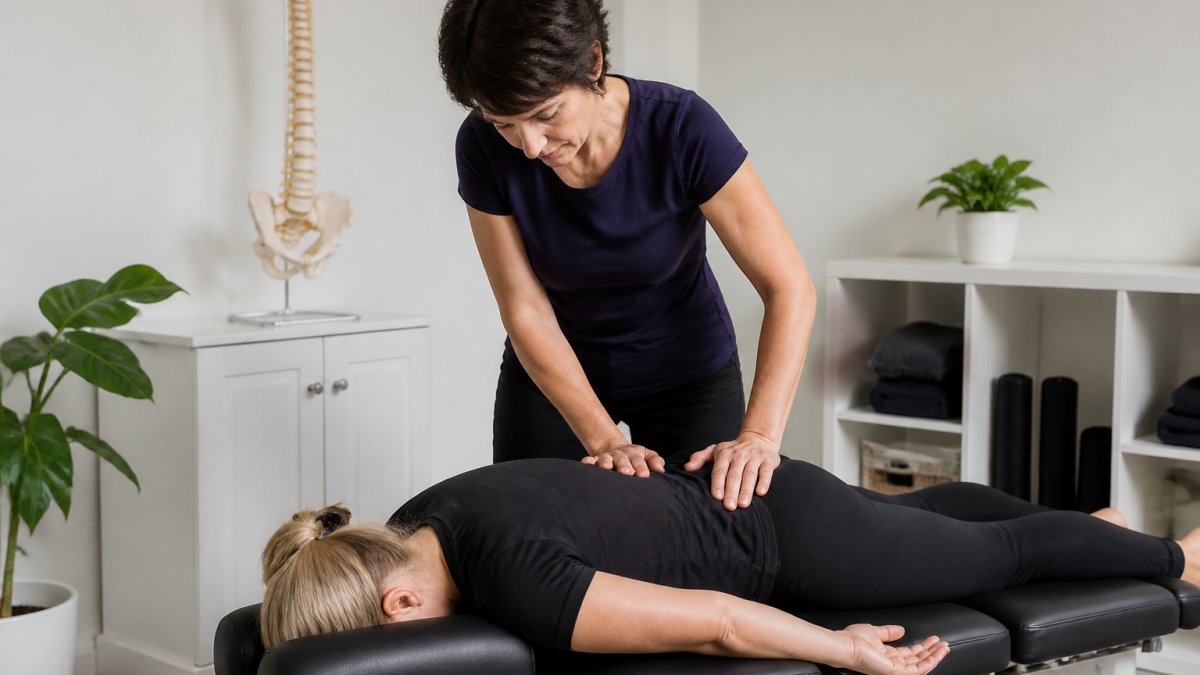
Treatment typically involves specific adjustments. These are gentle, targeted movements designed to shift vertebrae toward better alignment. Most people find adjustments comfortable.
We'll also discuss exercises and postural habits. Your spine didn't shift overnight. Lasting correction requires your active participation. We'll show you stretches and movements to support the changes we're making.
Learn more about your chiropractic journey and what happens at your first visit
Daily stretches to improve spinal posture
Better posture starts with movement. These stretches help undo the tension that desk work and driving create.
Do these stretches daily. Hold each for 20 to 30 seconds. Breathe steadily throughout.
Neck stretch
Gently tilt your head toward your right shoulder. Feel the stretch along the left side of your neck. Don't force it. Return to centre and repeat on the other side.
Chest opener
Stand in a doorway. Place your right arm on the frame at shoulder height. Step forward gently until you feel a stretch across your chest. This counteracts the rounded shoulder posture many people develop.
Spinal twist
Sit upright. Cross your right leg over your left. Place your left elbow on your right knee. Gently twist toward your right. You'll feel the stretch along your spine and lower back.
Hip flexor stretch
Kneel on your right knee. Step your left foot forward. Gently press your hips forward. This stretches the front of your hip, which affects lower back posture.
Cat and cow
Get on your hands and knees. Arch your back gently, dropping your belly toward the floor. Then round your spine, tucking your chin. Move slowly between these positions. This mobilises your entire spine.
These stretches take five minutes total. Many people find them most helpful in the morning or after long periods sitting. Consistency matters more than intensity.
The NHS guidance on posture and back pain prevention
Discover posture support if desk work or driving affects your spine
How long does posture correction take?
Structural spinal correction isn't quick. Real change takes time. Your body needs time to adapt and hold new alignment.
Most people notice initial improvements within two to four weeks. Pain often reduces as alignment improves. Movement feels easier. You sleep better.
However, full structural correction typically unfolds over several months. Some people see significant progress in three months. Others need six months or longer. The timeline depends on several factors:
- How long your spine has been misaligned
- How severe the misalignment is
- How consistently you do your exercises
- Your age and overall health
- How well your body adapts
Think of it like orthodontic braces for your teeth. The dentist doesn't straighten teeth in a week. Your spine works the same way. Gradual, consistent pressure creates lasting change.
We monitor your progress with regular reassessments. These show whether your spine is moving in the right direction. If progress stalls, we adjust the plan.
Many people ask about maintenance. Once your spine reaches better alignment, ongoing care helps prevent relapse. Some people benefit from monthly visits. Others do well with quarterly check-ups.
The investment in time pays off. People who complete structural correction often enjoy years of better movement, less pain, and improved quality of life.
Structural spinal correction follows a gradual timeline, with most people experiencing changes at different stages.
| Stage | Timeline | What typically happens |
|---|---|---|
| Initial improvements | Two to four weeks | Pain reduces, movement feels easier |
| Significant progress | Three months | Noticeable structural changes |
| Full correction | Six months or longer | Spine reaches better alignment |
| Maintenance phase | Ongoing | Monthly or quarterly check-ups help prevent relapse |
Who benefits most from structural spinal correction
This approach works well for several groups of people.
People with desk jobs and driving
If you spend your day hunched over a computer or sitting in a car, your spine is under constant stress. Your head pulls forward. Your shoulders round. Your lower back flattens. Structural correction addresses these patterns directly.
People with chronic pain
If you've had back or neck pain for years, standard treatment may not be addressing the root cause. Structural correction looks deeper. It identifies and corrects the alignment issues driving your pain.
Active people wanting to move better
Athletes and active people often have movement restrictions from old injuries or postural habits. Structural correction improves mobility and movement quality. You move better and stay mobile as you age.
Expectant mothers
Pregnancy changes your posture dramatically. Your centre of gravity shifts. Your spine compensates. This creates back and pelvic pain. Structural correction helps your spine adapt to pregnancy changes.
People in Stockport and Cheadle seeking lasting solutions
If you want real change rather than temporary relief, structural correction is worth considering. It requires commitment, but it addresses the actual problem.
Structural spinal correction isn't right for everyone. Some conditions need different approaches. A proper assessment determines whether this method suits you.
Book your structural spinal correction assessment
The first step is understanding your spine. An assessment shows exactly what's happening and whether structural correction can help.
At Dr Roberta Chiropractor in Cheadle, we specialise in this approach. We're one of only 25 qualified Chiropractic BioPhysics (CBP) practitioners in the UK. This specialist training means we understand structural correction deeply.
We've helped people in Cheadle, Stockport, and nearby areas restore spinal alignment and move better. Many had tried other approaches without lasting success. Structural correction gave them real change.
Your assessment includes consultation, postural analysis, and advanced scanning. You'll understand your spine's structure and what needs to change.
[Book a structural spinal correction assessment and start your journey toward better alignment](page:1)
Frequently Asked Questions
What does structural spinal correction actually do?
Structural spinal correction realigns vertebrae that have shifted from their ideal position. Misalignment, called subluxation, can restrict movement, compress nerves, and cause pain. By restoring proper alignment, your spine can function better, reducing discomfort and improving how your body moves and adapts. The goal is to address the root cause of pain rather than just managing symptoms.
How long does posture correction take to show real results?
Most people notice initial improvements within two to four weeks, though this varies. Structural changes take longer. Your spine has adapted to poor posture over months or years, so rebuilding proper alignment is gradual. A chiropractor will assess your specific situation and discuss realistic timescales during your consultation. Consistency with treatment and home stretches speeds progress.
Is structural spinal correction safe during pregnancy?
Yes, chiropractic care can be adapted safely for pregnancy. Techniques focus on relieving pelvic and lower back pain without putting pressure on your abdomen. A chiropractor trained in prenatal care uses specialised tables and gentle adjustments. Always inform your chiropractor that you are pregnant so they can adjust their approach. Many pregnant women find it helpful for managing discomfort as their body changes.
Can daily stretches alone improve my spinal posture, or do I need professional treatment?
Daily stretches help maintain flexibility and support posture between appointments, but they cannot correct structural misalignment on their own. If your spine has shifted significantly, stretching alone won't restore proper alignment. A chiropractor uses specific techniques to realign vertebrae, then stretches and exercises help you maintain that correction. The combination works better than either approach alone.
Chronic pain and movement restrictions don't have to be permanent. Structural spinal correction addresses the underlying alignment issues creating your symptoms. If you're ready to explore whether this approach can help, get in touch with Dr Roberta Chiropractor in Cheadle. We'll assess your spine and create a personalised plan to restore better alignment and function.