 how-to
Is Chiropractic Safe During Pregnancy
Table of Contents
- Is Chiropractic Safe During Pregnancy
- Understanding Pregnancy Related Back Pain
- How Chiropractic Adjustments During Pregnancy Work
- Common Pregnancy Chiropractor Questions Answered
- What to Expect When You See a Chiropractor While Pregnant
- Choosing the Right Chiropractor for Pregnancy Care
- Frequently Asked Questions
Last Updated: October 17, 2026
Is Chiropractic Safe During Pregnancy
Pregnancy brings profound changes to your body. Your centre of gravity shifts. Your ligaments soften. Your spine carries extra weight in ways it never has before. Many expectant mothers in Cheadle and across Stockport experience significant back and pelvic pain during these months. The question of whether chiropractic care is safe during pregnancy is one we hear often, and it deserves a clear, honest answer.
Is chiropractic safe during pregnancy? Yes, when delivered by a qualified practitioner with experience in prenatal care. Chiropractic adjustments during pregnancy can help ease discomfort and support your body's natural adaptation to the changes happening right now. The key is working with someone who understands how to modify techniques for your changing physiology and who has specific training in pregnancy care.
At Dr Roberta Chiropractor in Cheadle, we specialise in prenatal wellness. We use gentle, evidence-based techniques tailored to expectant mothers. Our approach focuses on supporting your comfort and mobility throughout pregnancy, not on making claims beyond what the evidence supports.
This guide explains what chiropractic care during pregnancy involves, addresses your common concerns, and helps you decide if it's right for you.
Understanding Pregnancy Related Back Pain
Pregnancy related back pain affects many women. It's one of the most common complaints we hear from expectant mothers in our Cheadle clinic. The causes are straightforward: your body is adapting to significant physical demands.
As pregnancy progresses, several changes occur:
- Your centre of gravity shifts forward as your bump grows
- The hormone relaxin softens ligaments throughout your pelvis and spine
- Your posture adjusts to accommodate the weight you're carrying
- Pelvic joints become more mobile and sometimes unstable
- Your lower back muscles work harder to support the extra load
These changes are normal. They're also often uncomfortable. Many women describe lower back pain, pelvic pain, or both. Some notice their pain worsens as the day goes on. Others find certain positions trigger discomfort.
The pain typically develops in the second or third trimester, when weight gain accelerates and postural changes become more pronounced. It's not something you simply have to endure for nine months. Practical support, including chiropractic care, can make a real difference.
How Chiropractic Adjustments During Pregnancy Work
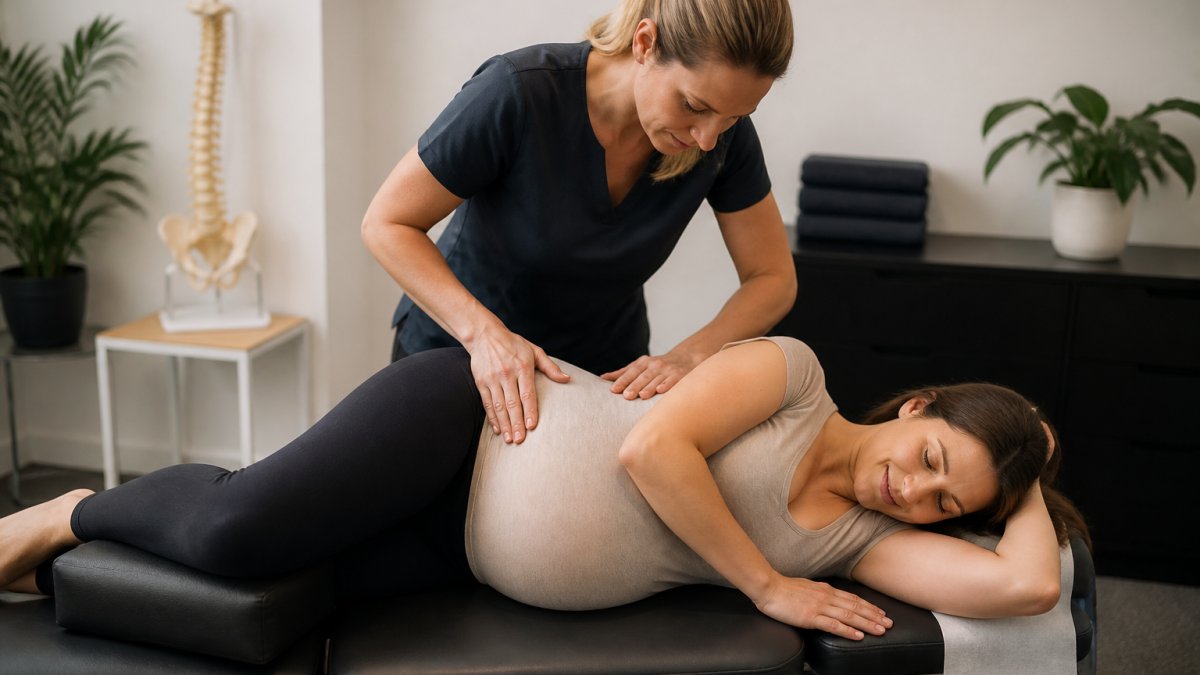
Chiropractic adjustments during pregnancy are modified versions of standard techniques. They're gentler, more targeted, and designed specifically for your changing body.
A qualified prenatal chiropractor uses several approaches:
Gentle spinal adjustments. These focus on restoring normal movement to joints that have become restricted or misaligned. During pregnancy, we use lower force and adapted hand positions to avoid pressure on your abdomen.
Pelvic stabilisation techniques. The pelvis bears much of the extra load during pregnancy. Specific adjustments and exercises help stabilise pelvic joints and reduce pain.
Postural guidance. We help you understand how to move, sit, and sleep in ways that reduce strain on your lower back and pelvis.
Soft tissue work. Gentle massage and stretching of muscles that are working overtime during pregnancy can ease tension and improve comfort.
The goal is straightforward: help your body adapt to pregnancy more comfortably. We're not treating a disease. We're supporting your body's natural function during a time of significant change.
Most expectant mothers report feeling better after care begins. Pain often decreases. Movement becomes easier. You may sleep better and feel more able to manage daily activities.
Common Pregnancy Chiropractor Questions Answered
Will adjustments affect my baby?
This is the question we hear most often, and the concern is understandable. The answer is clear: no. When performed by a trained prenatal chiropractor, adjustments do not harm your baby.
Here's why: adjustments to your spine and pelvis don't involve pressure on your abdomen or direct contact with your baby. Your baby is protected inside the uterus, surrounded by amniotic fluid. Spinal adjustments work on your skeleton, not on structures that would affect your pregnancy.
In fact, many expectant mothers find that better spinal alignment and pelvic stability make pregnancy more comfortable. Some report improved sleep, easier movement, and reduced pain. These improvements benefit both you and your baby by reducing physical stress on your body.
What matters is choosing a chiropractor with specific training in prenatal care. We use modified techniques, adapted positioning, and careful assessment to ensure your safety and comfort throughout your pregnancy.
When is it safe to start treatment?
You can begin chiropractic care at any stage of pregnancy, from the first trimester through to your due date. Many women start when pain becomes noticeable, usually in the second or third trimester. Others begin earlier, seeking preventive support.
The best time to start is whenever you feel you need help. If you're experiencing back or pelvic pain, there's no benefit to waiting. Early care often prevents pain from worsening as pregnancy progresses.
If you haven't seen a chiropractor before, let us know you're pregnant at your first appointment. We'll take time to understand your medical history, any previous injuries, and your current pregnancy. This information helps us tailor care specifically for you.
Treatment during pregnancy is typically gentle and focuses on comfort rather than aggressive correction. Most expectant mothers tolerate care very well and notice improvements quickly.
What to Expect When You See a Chiropractor While Pregnant
Your first appointment will feel different from a standard chiropractic visit. We take extra time to understand your pregnancy, your symptoms, and your concerns.

Here's what typically happens:
Initial consultation. We discuss your pregnancy stage, any pain or discomfort you're experiencing, your medical history, and any previous chiropractic care. We ask about your daily activities, how you sleep, and what positions make symptoms better or worse.
Physical examination. We assess your posture, pelvic alignment, and spinal mobility. We check how well your pelvis is functioning. We may use gentle movement tests to identify areas of restriction or instability.
Imaging if needed.
Personalised care plan. Based on our findings, we explain what we've discovered and recommend a treatment approach tailored to your needs. This might include adjustments, exercises, postural advice, or all three.
Treatment sessions. Adjustments during pregnancy are gentler than standard techniques. Sessions typically last 20 to 30 minutes. You may feel immediate relief, or improvements may develop over several visits.
Ongoing guidance. We provide practical advice about sleeping positions, sitting ergonomics, and movements to avoid. These changes often make as much difference as the adjustments themselves.
Most expectant mothers feel comfortable and supported throughout their care. We're here to listen to your concerns and adjust our approach based on how you're responding.
Choosing the Right Chiropractor for Pregnancy Care
Not all chiropractors have training in prenatal care. Choosing the right practitioner matters.
Look for these qualities:
Specific prenatal training. Ask whether the chiropractor has formal training or certification in pregnancy care. This training teaches modified techniques and helps practitioners understand the unique needs of expectant mothers.
Experience with pregnant patients. How many pregnant women has this chiropractor cared for? Are they comfortable discussing pregnancy and working alongside your midwife or GP?
Clear communication. A good prenatal chiropractor explains what they're doing, why, and what you can expect. They answer your questions honestly and don't make promises they can't keep.
Willingness to refer. If a chiropractor believes your symptoms warrant investigation by your GP or midwife, they should say so. Collaborative care is always better than working in isolation.
Appropriate equipment. Pregnancy-specific chiropractic tables have cutouts or adjustable sections to accommodate your growing belly. This makes positioning comfortable and safe.
Listening skills. Your comfort and preferences matter. A good chiropractor listens to your concerns and modifies care accordingly.
In Cheadle and across Stockport, we're fortunate to have practitioners trained in prenatal care. When you're choosing, don't hesitate to ask questions about training, experience, and approach. You deserve care from someone who understands pregnancy and is committed to your safety and comfort.
Pregnancy brings real physical changes, and the discomfort that comes with them is manageable. Chiropractic care, when delivered by a qualified practitioner with prenatal training, can help you move more easily and feel more comfortable during these important months. If you're experiencing pregnancy related back pain or pelvic discomfort in Cheadle or nearby areas, we're here to help. Book an appointment with Dr Roberta Chiropractor to discuss how we can support your pregnancy and help you feel your best.
Frequently Asked Questions
Is chiropractic safe during pregnancy?
Yes, chiropractic care is safe during pregnancy when delivered by a qualified practitioner experienced in prenatal care. Chiropractors who work with pregnant patients use modified techniques and specialised equipment designed for your comfort. Treatment focuses on relieving pain and supporting your body's natural adaptation to pregnancy. Always tell your chiropractor you are pregnant before your first appointment so they can tailor their approach.
Can chiropractic adjustments help with pregnancy related back pain?
Chiropractic adjustments during pregnancy can help ease back and pelvic pain by addressing spinal alignment and reducing tension. Pregnancy shifts your centre of gravity and places extra load on your lower back and pelvis, which often causes discomfort. Specialised adjustments and stretches can relieve this strain. Many pregnant patients find relief without medication, which is particularly important during pregnancy.
Should I speak to my GP or midwife before seeing a chiropractor while pregnant?
It is sensible to mention chiropractic care to your GP or midwife, especially if you have any pregnancy complications or concerns. Most healthcare providers support safe, evidence-based chiropractic care during pregnancy. Your chiropractor will also ask about your pregnancy history and any medical considerations. Open communication between your care team ensures your treatment is coordinated and safe.
What pregnancy chiropractor questions should I ask at my first appointment?
Ask whether your chiropractor has specific training in prenatal care and what techniques they use for pregnant patients. Enquire about how often you need treatment and what to expect from each session. Ask how they modify their approach for each trimester and whether they use specialised equipment like pregnancy pillows. A qualified practitioner will answer these questions clearly and adjust their plan based on your needs.