 how-to
CBP Chiropractor: What It Is and How It Works
Table of Contents
- What is Chiropractic BioPhysics and why it matters
- How a CBP chiropractic assessment works
- CBP posture exercises and your treatment plan
- Who benefits from CBP chiropractic care
- Key questions to ask a chiropractor about CBP
- How CBP differs from standard chiropractic treatment
- Getting started with CBP chiropractic in your area
- Frequently Asked Questions
Last Updated: 11 October 2026
What is Chiropractic BioPhysics and why it matters
Chiropractic BioPhysics is a CBP chiropractor approach that uses evidence based assessment and structural correction to improve spinal alignment and posture. It differs from standard chiropractic care by focusing on measuring and correcting the shape of your spine, not just treating pain symptoms.
At Dr Roberta Chiropractor in Cheadle, we use CBP chiropractic principles to address the root cause of discomfort rather than offering temporary relief. Your spine supports everything your body does. When it shifts out of alignment, it affects how you move, how you feel, and how your body heals.
Most people develop postural problems gradually. Desk work, driving, phone use, and everyday habits reshape your spine over months and years. A CBP chiropractor assesses these structural changes and creates a plan to restore better alignment.
Why does this matter? Your nervous system runs through your spine. When vertebrae move out of position, they can affect nerve function. Restoring alignment helps your body adapt and heal naturally.
How a CBP chiropractic assessment works
A CBP chiropractic assessment is thorough and detailed. It takes time because we need accurate information about your spine's current shape and function.
Your first appointment includes a full consultation about your health history, current discomfort, and lifestyle. We ask about injuries, work habits, and what brought you in today. This context matters because it shapes your treatment plan.
Next comes the physical examination. We assess your posture, range of motion, and how your spine moves. We check how your body is balanced and where restrictions exist.
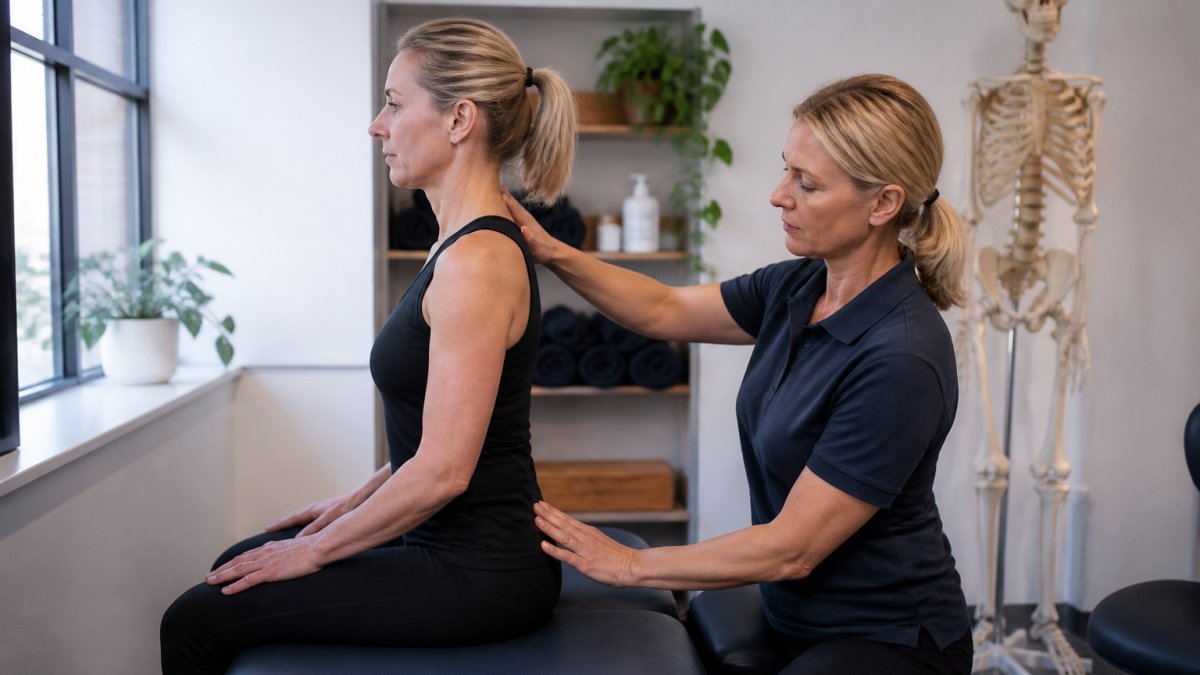
Then we use advanced scanning technology to measure your spine in detail. This shows us the exact position of each vertebra and how your overall spinal shape compares to healthy alignment. It's not guesswork. We see the data.
We review the results with you. We explain what we found and what it means for your body. We discuss realistic goals and what a treatment plan might look like.
What to expect during your first visit
Your first visit to a CBP chiropractor takes longer than follow up appointments. Plan for around 60 minutes.
You'll complete some paperwork about your health and any previous injuries. We ask detailed questions because context helps us understand your situation.
The physical examination includes:
- Posture assessment
- Spine and joint movement testing
- Neurological screening
- Muscle strength checks
- Balance and coordination assessment
After the examination, we perform the scanning. This is painless and takes just a few minutes. You stand or sit still while the technology captures detailed images of your spine.
We then discuss findings, answer your questions, and explain next steps. If we recommend treatment, we outline what that involves and what you can expect.
CBP posture exercises and your treatment plan
Your treatment plan includes more than appointments in the clinic. We teach you exercises and posture habits that support the changes we're making.
CBP posture exercises target the specific areas where your spine needs correction. They're not generic stretches. They're designed to reinforce better alignment and help your body maintain the improvements we're building.
We show you how to do each exercise correctly. Proper form matters. We also explain why each one helps your particular situation.
Your plan might include:
- Exercises to strengthen weak areas
- Stretches to release tight muscles
- Posture cues for daily activities
- Ergonomic adjustments at work or home
- Activity modifications to protect your spine
Most people do exercises at home between appointments. We provide clear instructions and often give you written or video guides so you remember exactly what to do.
The goal is active participation. You're not just receiving treatment. You're learning to support your own healing and maintain better alignment long term.
Who benefits from CBP chiropractic care
CBP chiropractic care helps many different people. It works best for those with structural spinal problems or postural issues.
People with chronic back pain often see good results. If you've had pain for months or years, your spine has likely adapted to poor alignment. A CBP chiropractor addresses that underlying structure.
People with neck pain and headaches benefit too. Neck alignment affects blood flow and nerve function. Correcting it often reduces both neck pain and headache frequency.
Pregnant people in Cheadle and Stockport find CBP chiropractic helpful for pregnancy related back and pelvic pain. Pregnancy shifts your centre of gravity and stresses your lower back. Maintaining spinal alignment reduces discomfort and supports better movement.
Active people who want to move better and stay mobile as they age benefit from improved spinal alignment. Better posture and alignment mean better function and fewer injuries.
People with desk jobs or long driving hours often develop postural problems. If you spend hours in one position daily, your spine gradually adapts to that position. CBP chiropractic can reverse this.
People who've tried other treatments without lasting relief sometimes find CBP chiropractic works differently because it addresses structure rather than just symptoms.
Key questions to ask a chiropractor about CBP
When you're considering a CBP chiropractor, ask the right questions. This helps you find someone trained in this specific approach.
Ask whether they're trained in Chiropractic BioPhysics specifically. Not all chiropractors use this method. It requires additional training beyond basic chiropractic qualification.
Ask what scanning technology they use. A CBP chiropractor should use advanced imaging to measure your spine precisely. Ask how they use those measurements to track your progress.
Ask about their experience with your specific issue. Someone with lots of experience treating pregnancy related pain might be different from someone who mostly treats sports injuries.
Ask what a typical treatment plan looks like. How many appointments? How often? What happens between appointments?
Ask how they measure progress. A CBP chiropractor should track objective changes in your spinal alignment, not just how you feel.
Ask about their qualifications. Look for PX Docs certification or specific CBP training credentials.
Ask what happens if you don't improve as expected. A good practitioner adjusts the plan if it's not working.
Ask about costs and what's included. While we can't quote specific prices here, you should understand what you're paying for and what to expect.
How CBP differs from standard chiropractic treatment
Standard chiropractic care often focuses on pain relief and symptom management. A chiropractor adjusts joints to reduce discomfort and improve mobility.
CBP chiropractor care takes a different approach. It focuses on measuring and correcting your spine's actual shape. The goal is structural restoration, not just symptom relief.
Standard chiropractors might help you feel better quickly. A CBP chiropractor works toward longer lasting changes by addressing the underlying structural problem.
Standard care often involves regular adjustments. CBP chiropractor treatment combines adjustments with exercises, posture retraining, and specific correction techniques designed to change your spine's shape over time.
Standard chiropractors don't always measure spinal alignment precisely. A CBP chiropractor uses advanced scanning to see exactly what's happening and to track measurable changes.
Think of it this way. Standard chiropractic is like adjusting a door that's hanging crooked. CBP chiropractic is like adjusting the door frame so the door hangs straight naturally.
Both approaches have value. Standard care works well for acute pain. CBP chiropractor care works better for chronic issues where the underlying structure has adapted to poor alignment.
Dr Roberta Chiropractor uses CBP principles because we see better long term results when we address the structural cause rather than just treating symptoms. This is especially true for chronic pain, postural problems, and conditions that haven't responded to other treatments.
Getting started with CBP chiropractic in your area
If you're in Cheadle, Stockport, or nearby areas, finding a trained CBP chiropractor takes some research. This approach isn't as common as standard chiropractic care.
Look for practitioners with specific CBP training. Check whether they mention Chiropractic BioPhysics on their website or in their practice description. Ask directly whether they're trained in this approach.
Ask about their scanning technology. A CBP chiropractor should have advanced imaging equipment. This is essential for the approach.
Check their qualifications. Look for credentials that show additional training beyond basic chiropractic qualification. PX Docs certification is a strong indicator.
Ask about their experience with your specific issue. If you have chronic back pain, ask how many people they've treated with similar problems and what results they typically see.
Book an initial consultation. Most CBP chiropractors offer a thorough assessment that includes scanning and detailed explanation of findings. This gives you a clear picture of what treatment might involve.
Ask about their approach to progress tracking. You should understand how they'll measure improvement and how often they'll reassess your spine.
Dr Roberta Chiropractor is one of only 25 qualified Chiropractic BioPhysics (CBP) practitioners in the UK and one of only six PX Docs certified practitioners. We specialise in neurological, prenatal, paediatric and family wellness care using CBP principles and advanced INSiGHT scanning technology.
If you've tried other approaches without lasting relief, or if you want to address the underlying structural cause of your discomfort rather than just managing symptoms, a CBP chiropractor might be right for you. The General Chiropractic Council regulates chiropractors in the UK and maintains a register of qualified practitioners. When you're ready to explore CBP chiropractic care, book an appointment with Dr Roberta Chiropractor to discuss whether this approach suits your situation.
Frequently Asked Questions
What is Chiropractic BioPhysics and how does it differ from regular chiropractic?
Chiropractic BioPhysics (CBP) is an evidence-based approach that combines biomechanics, physics and anatomy to address spinal misalignment. Unlike standard chiropractic, CBP uses precise measurements and structural correction rather than symptom relief alone. It focuses on restoring your spine's natural curves and alignment to help your body function better. A CBP chiropractor uses advanced assessment tools to create a detailed plan tailored to your specific spinal structure.
How long does a CBP chiropractic assessment take and what happens during it?
A CBP assessment typically involves detailed postural analysis, spinal imaging, and neurological testing to map your spine's current alignment. Your chiropractor will review your medical history and discuss your symptoms and lifestyle. This thorough evaluation helps identify the root cause of your discomfort rather than just treating what hurts. The appointment length depends on your individual needs, so ask your practitioner for specific timing when you book.
Will CBP chiropractic help if I have chronic back or neck pain that hasn't improved with other treatments?
CBP addresses structural misalignment that may underlie persistent pain. Many people find it helpful when other approaches haven't worked because it targets alignment rather than just pain management. However, results vary depending on your individual condition, how long you've had the pain, and your commitment to exercises and posture changes. A consultation with a qualified CBP practitioner can help determine whether this approach is right for you.
What questions should I ask a chiropractor to understand their CBP approach?
Ask whether they're qualified in Chiropractic BioPhysics, how many patients they've treated with CBP, what their assessment process includes, and how they measure progress. Enquire about the typical treatment plan length and what exercises or lifestyle changes you'll need to do at home. Ask how they communicate results and whether they use advanced imaging technology. These questions help you understand their methods and decide if they're a good fit for your needs.