You might feel tired but unable to switch off. Perhaps your shoulders are always tense, your sleep is restless, or your digestion seems more unsettled when life gets busy. It can be frustrating when these things arrive together and you’re not sure where to start.
“Nervous system regulation” is a phrase you may have seen online. It describes how the body responds to changing demands and settles again when it can. It isn’t about staying calm all the time, and it doesn’t mean that every ache or difficult night is caused by your nervous system.
What does nervous system regulation mean?
Your autonomic nervous system helps manage automatic processes such as heart rate, blood pressure and digestion. It includes sympathetic pathways, which help prepare you to respond to a demand, and parasympathetic pathways, which are associated with functions such as digestion and recovery.
Both are necessary. The aim isn’t to switch off the sympathetic system or keep the parasympathetic nervous system “on” all day. Healthy regulation means your body can respond when needed and adapt as circumstances change.
Stress can be part of that picture. A busy period at work, poor sleep, illness, pain or emotional strain may all affect how alert or settled you feel. People sometimes describe this as being “wired but tired”, but experiences vary, and that phrase is not a diagnosis.
How can stress and physical tension affect how you feel?
When something feels demanding or threatening, the body can become more alert. You might notice faster breathing, clenched muscles or difficulty winding down. These responses can be useful in the moment; they can feel wearing when there is little opportunity to rest and recover.
Physical discomfort may add to the strain. If your neck or back is sore, you may brace, move less freely or find it harder to get comfortable at night. Stress and discomfort can influence one another, but that doesn’t mean spinal tension alone causes someone to remain in “fight or flight”, or that a spinal adjustment can reset the nervous system.
A whole-person view considers how symptoms fit with your health history, movement, sleep, daily routines and stressors. It avoids assuming one cause or treating an everyday feeling as proof of nervous system dysregulation.

What might feel like nervous system dysregulation?
People use “nervous system dysregulation” to describe a range of experiences, including feeling persistently on edge, struggling to relax, poor sleep or ongoing muscle tension. Some also notice changes in digestion or energy levels during stressful times.
These experiences can have many possible explanations. They do not, on their own, tell you whether your autonomic nervous system is functioning abnormally. If symptoms are persistent, worrying or affecting everyday life, speak with an appropriate healthcare professional rather than trying to diagnose yourself from an online checklist.
How can chiropractic care fit in?
Chiropractic care focuses on the joints, muscles and movement of the body. If pain, stiffness or restricted movement is part of your experience, an assessment can help explore those concerns and whether chiropractic care is appropriate for you.
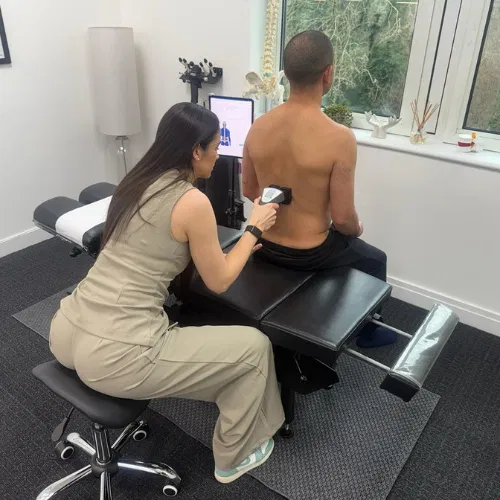
At our Cheadle clinic, Dr Roberta considers your history alongside a physical examination. Care is personalised; it may include hands-on techniques and guidance around movement or rehabilitation where suitable. The aim is to address relevant musculoskeletal findings and support your individual goals, not to promise that an adjustment will regulate your nervous system or treat anxiety, digestive problems or other conditions.
Dr Roberta is one of only six PX Docs certified practitioners in the UK. That training informs our nervous-system-centred approach, but it does not replace careful assessment or mean that every concern is caused by the nervous system. You can read more about neurologically focused chiropractic care.
What are INSiGHT scans?
INSiGHT is a set of non-invasive scanning tools that may be used alongside your history and clinical examination. Depending on what is appropriate, scans can include heart rate variability (HRV), which measures variation in the time between heartbeats; surface electromyography (sEMG), which measures muscle activity; and thermography, which measures skin-temperature patterns.
These measures can offer additional information, but they are not a diagnosis of nervous system dysregulation or a substitute for medical tests. They are interpreted in context, not in isolation. Find out more about INSiGHT scans at our clinic.
Research into whether spinal manipulation directly changes measures of autonomic nervous system activity is still developing. A systematic review and meta-analysis found the available evidence was limited and did not establish a reliable overall effect. That’s why we focus on what can be assessed for you, explain findings clearly and avoid promising a “reset”.

Simple daily habits that may support regulation
Small, repeatable habits can make it easier to build moments of rest into the day. They are not a substitute for professional support when you need it, and there is no single routine that works for everyone.
- Try a gentle breathing pause. Sit comfortably and let your breathing slow without forcing it. A longer, easy exhale may feel calming; stop if you feel light-headed or uncomfortable.
- Take movement breaks. A short walk, a stretch or changing position can interrupt long periods of sitting. Choose movement that feels manageable for you.
- Keep a steady sleep routine where possible. A regular wind-down and a consistent time to get up can help create a calmer transition towards bed.
- Make space between tasks. A few minutes without a screen, a quiet cup of tea or time outdoors can offer a pause in a demanding day.
- Notice what affects you. If useful, jot down patterns in sleep, stress, activity and discomfort. This may help you explain what you’ve noticed to a healthcare professional.
Think of these as supportive practices, not a test you can pass or fail. If one habit adds pressure, adapt it or leave it aside.

Frequently asked questions
Can you regulate your nervous system yourself?
You can try everyday practices such as gentle movement, a regular sleep routine and relaxed breathing. These may support wellbeing, but they are not a guaranteed way to change how your autonomic nervous system functions, and they won’t address every cause of symptoms.
Does chiropractic care reset the nervous system?
There isn’t strong evidence to say that chiropractic adjustments reliably reset the nervous system or switch the body from fight-or-flight into rest. Chiropractic care may be appropriate for some musculoskeletal concerns, with any potential benefit considered individually.
Can an INSiGHT scan diagnose nervous system dysregulation?
No. INSiGHT scans provide additional measurements that Dr Roberta may consider alongside your history and examination. They do not diagnose autonomic disorders or explain every symptom on their own.
Is feeling wired but tired a sign of dysregulation?
Not necessarily. It’s a way some people describe feeling fatigued yet alert, but it can have different explanations. If it persists or concerns you, discuss it with a suitable healthcare professional.
When should I seek medical advice?
If you have persistent or concerning symptoms, contact your GP or another appropriate healthcare professional. Chiropractic care is not a replacement for medical assessment, and Dr Roberta will discuss further investigation or referral where appropriate.
A supportive next step
If pain, tension or restricted movement is affecting your day, an assessment can help you talk through what you’re experiencing and whether chiropractic care may be suitable. Dr Roberta sees patients from Cheadle, Stockport and across South Manchester, and will explain the findings and options without promising a particular outcome.
Leave a Reply